Thermal solar energy capture via CSP, thermal energy storage, and electricity & hydrogen production
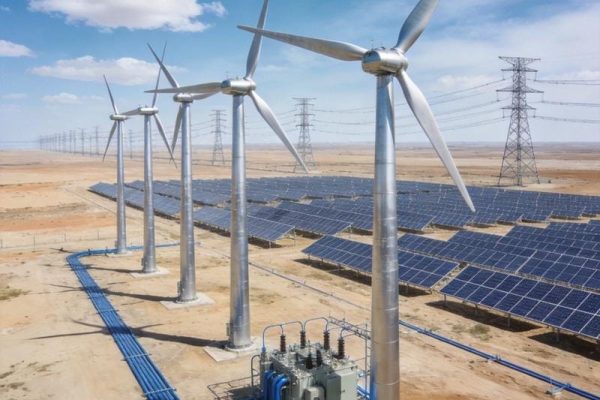
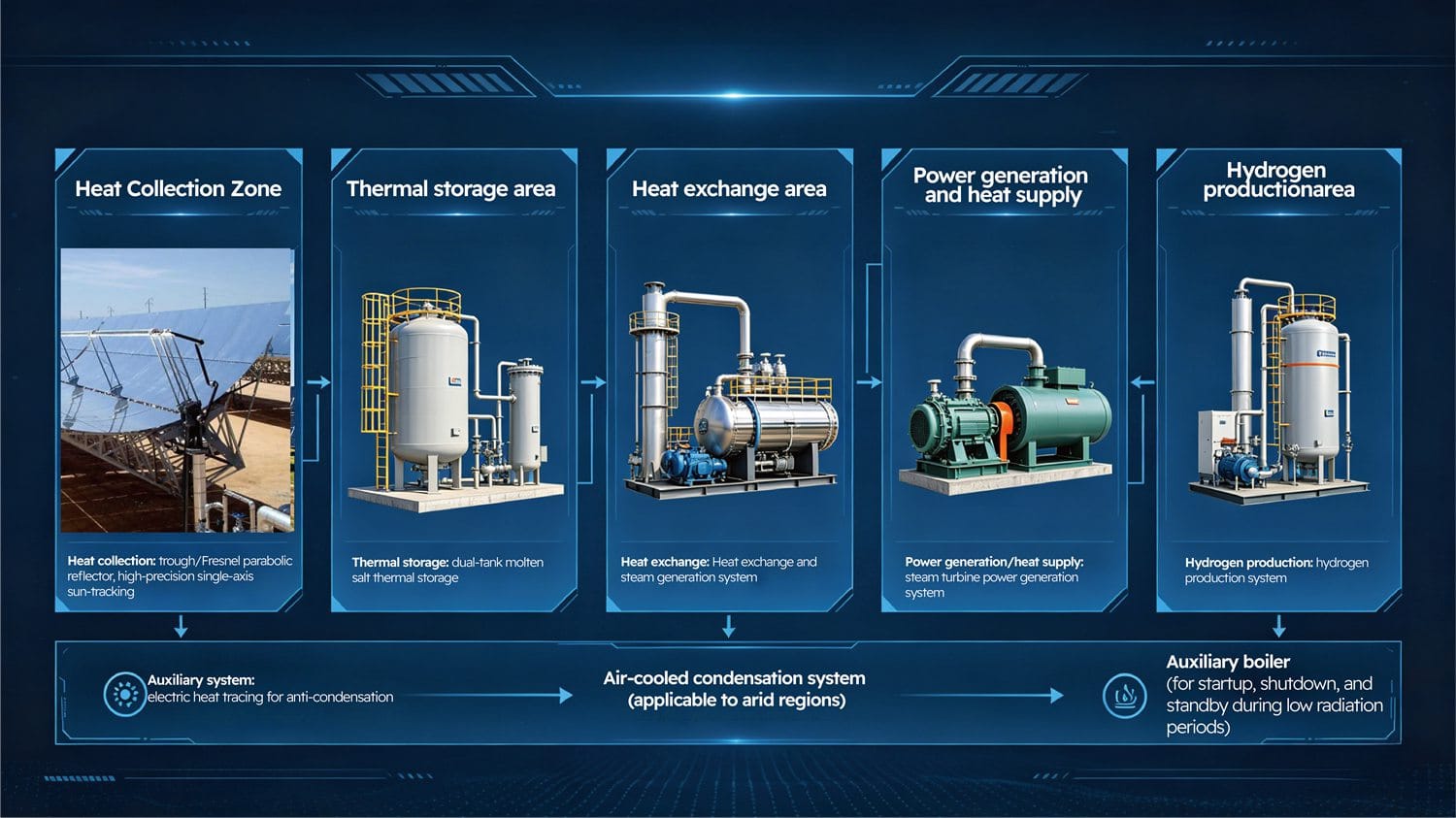
The CSP–Storage–Hydrogen system uses concentrated solar power as the primary clean heat source. With parabolic or Fresnel collectors, solar radiation is converted into thermal energy to heat working fluids such as thermal oil or molten salts, enabling thermal storage and continuous supply of thermal energy and steam 24/7.
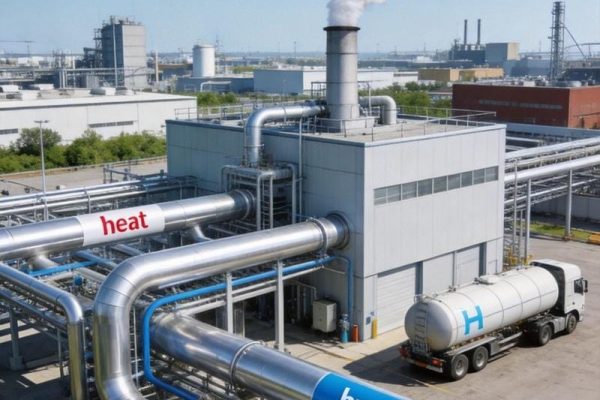
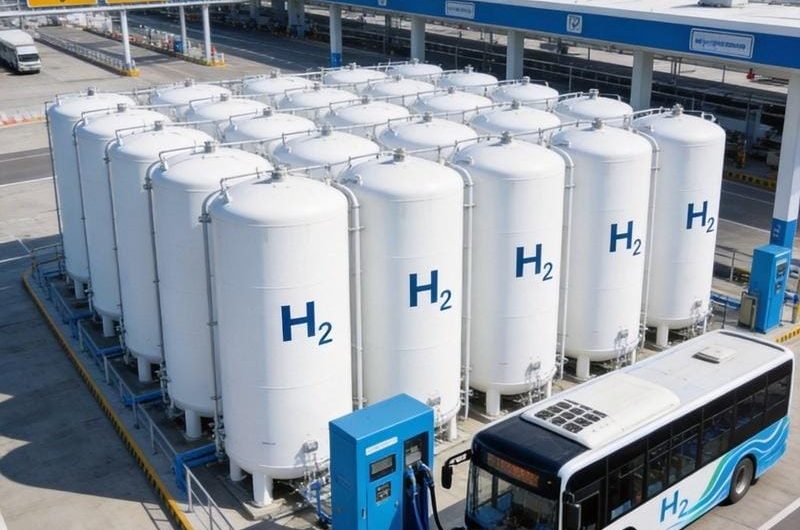
The system can use heat directly for industrial processes, achieving an efficiency of 40% to 50%, or convert it into electricity via steam turbines with an efficiency of 22% to 25%. Meanwhile, it integrates green hydrogen production through electrolysis powered by stable thermal and electrical energy, realizing efficient coupling among solar, thermal, electric and chemical energy.
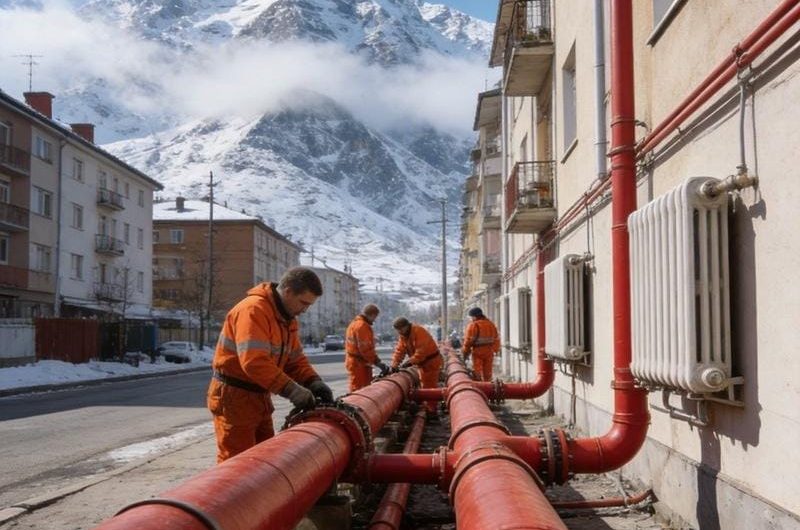
Compared with traditional CSP plants, the integration of the hydrogen module greatly improves the operational flexibility and economic viability of the system. It is especially suitable for cold or high-altitude regions, remote areas, large-scale energy projects and industrial applications with high thermal demand.
Parameter | Specification |
| CSP Capture Efficiency | 60%–65% (Parabolic trough and Fresnel systems) |
| Direct Heating Efficiency | 40 %–50 % |
| Thermoelectric Conversion Efficiency | 22%–25% (reheat cycle) |
| Thermal Storage Duration | 8–12 hours (adjustable) |
| Molten Salt Operating Temperature | 290 °C–565 °C |
| Salt Composition | Binary Nitrate (60% NaNO₃ + 40% KNO₃) |
| Main Steam Parameters | 380 °C–395 °C / 100–120 bar |
| Cooling System | Air cooling (for arid or water-scarce regions) |
| Maximum Receiver Temperature | up to 600 °C (TRX aerospace-grade coating) |
| Concentration Ratio | 70–80x |
| Tracking Precision | ≤0.1° |
Capture efficiency of 60%–65% and direct heating efficiency of 40%–50%, outperforming conventional CSP systems.
Molten salt system with 8–12 hours of thermal autonomy, ensuring continuous operation even without solar irradiation.
Integration of heat, electricity and hydrogen production within a single system, optimizing overall energy performance and improving project profitability.