
All-in-one system for photovoltaic power, energy storage and green hydrogen production.
The integrated Solar-Storage-Hydrogen system advancedly combines high-efficiency photovoltaic generation, electrochemical energy storage and green hydrogen production within a single low-emission energy platform with high stability and high performance.
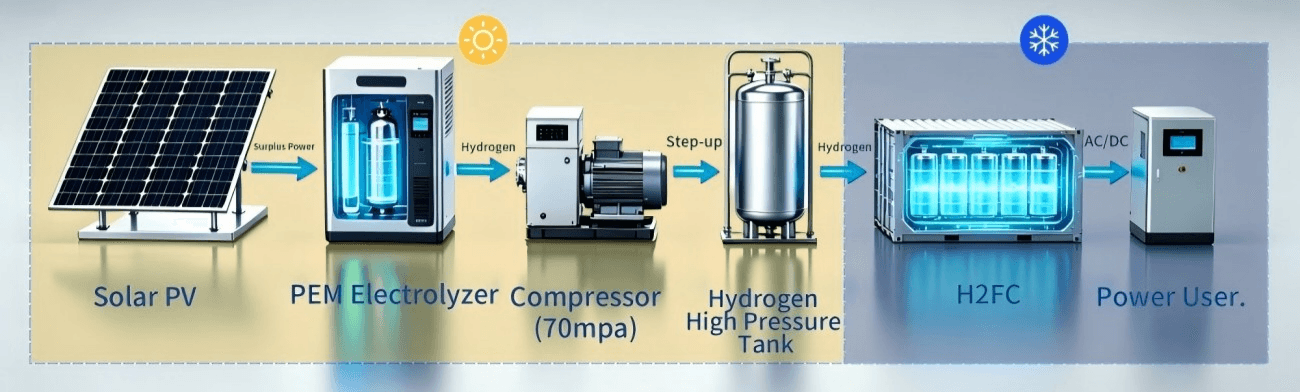
Solar energy is converted into electricity via high-performance photovoltaic modules. The battery system manages short-term fluctuations, including frequency regulation, voltage control and peak shaving. Surplus energy is used for water electrolysis to produce hydrogen, enabling large-scale and long-duration energy storage.
This system can flexibly supply electricity, heat and hydrogen for residential, commercial, industrial applications and large-scale energy infrastructure.
Compared with conventional standalone photovoltaic systems, the Solar-Storage-Hydrogen solution raises the renewable energy utilization rate by more than 30%, serving as a key architecture for multi-format energy scenarios in the future.
The system integrates on-site photovoltaic generation with water electrolysis, using surplus solar energy to produce green hydrogen.
The produced hydrogen is stored and can later be converted back into electricity or used directly as an energy vector during peak demand periods or critical seasonal conditions, thereby ensuring flexible and stable energy management.
Parameter | Specification | Description |
| Photovoltaic Conversion Efficiency | 23 %–26 % | High-efficiency monocrystalline and bifacial modules |
| Short-term Storage | Lithium / Flow Batteries | Millisecond response, over 6000 life cycles |
| Long-term Storage | Hydrogen | Storage from days to seasons, scalable to GWh level |
| Electrolysis Efficiency (PEM) | 55 %–65 % | Based on LHV |
| Electrolysis Efficiency (Alkaline) | 60 %–70 % | Based on LHV |
| Intelligent EMS | Advanced Energy Scheduling | Forecasting accuracy >90%, consumption increase >30% |
| Carbon Emissions | Zero Emissions | Throughout the entire life cycle |
| Applicable Scale | kW to GW | From residential applications to power grids |
Photovoltaic conversion efficiency reaches 23%–26%, and the operating system produces zero carbon emissions throughout its entire life cycle.
Batteries handle short-term fluctuations (seconds to hours), while hydrogen serves as a long-duration storage medium (days to seasons), ensuring energy continuity.
Highly flexible architecture adaptable from small-scale kW residential systems to utility-grade energy infrastructure at the GW scale.
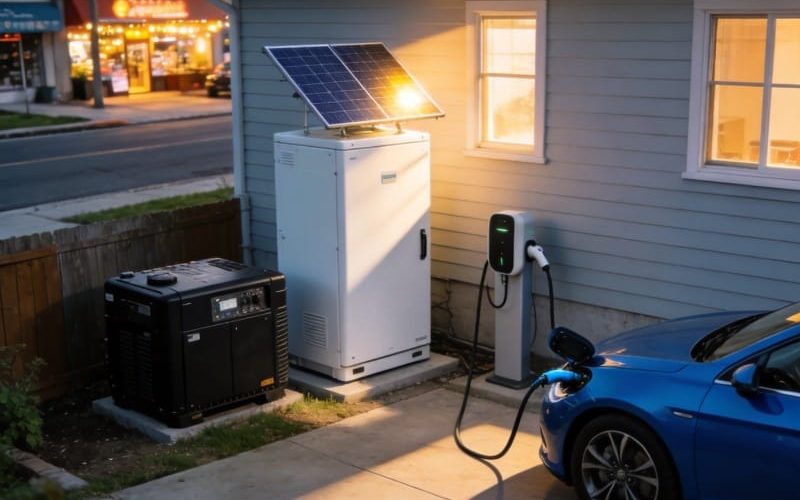
On-site energy self-consumption systems with backup capacity to guarantee power continuity during outages or peak demand.
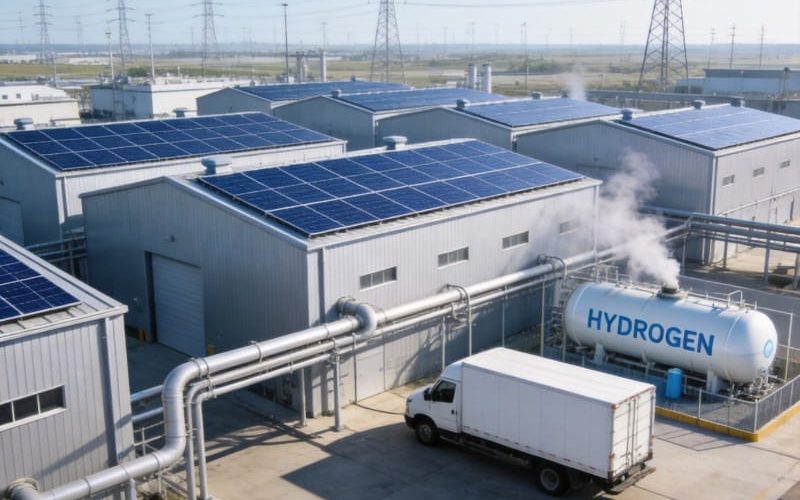
Integrated energy supply covering electricity, heating and hydrogen production, ensuring stable and efficient operation for industrial and commercial activities.
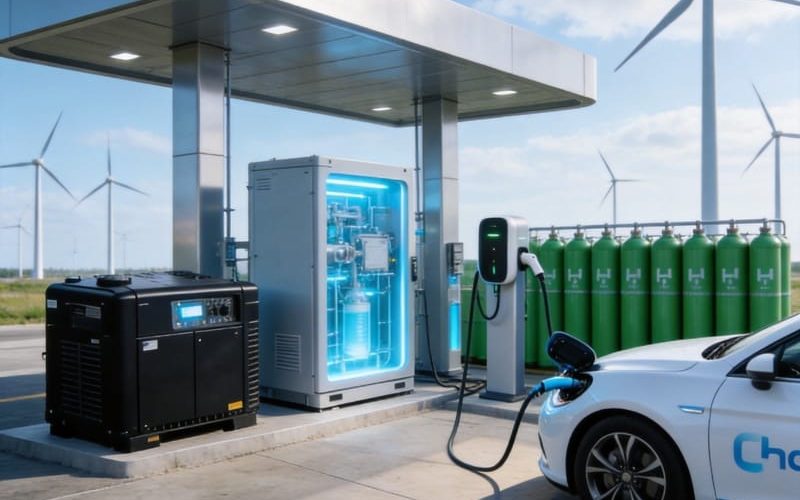
On-site production and supply of green hydrogen for mobility applications and clean energy distribution.
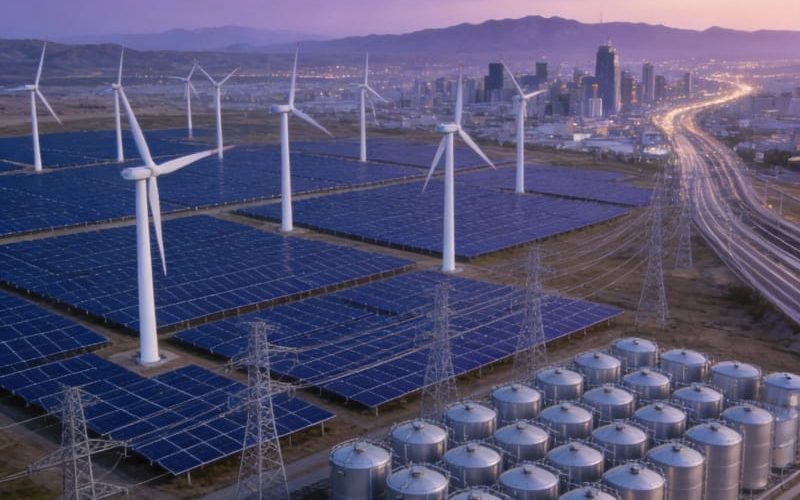
Nationwide energy storage systems that provide grid support and improve the stability of the overall energy system.